This page may contain affiliate links.
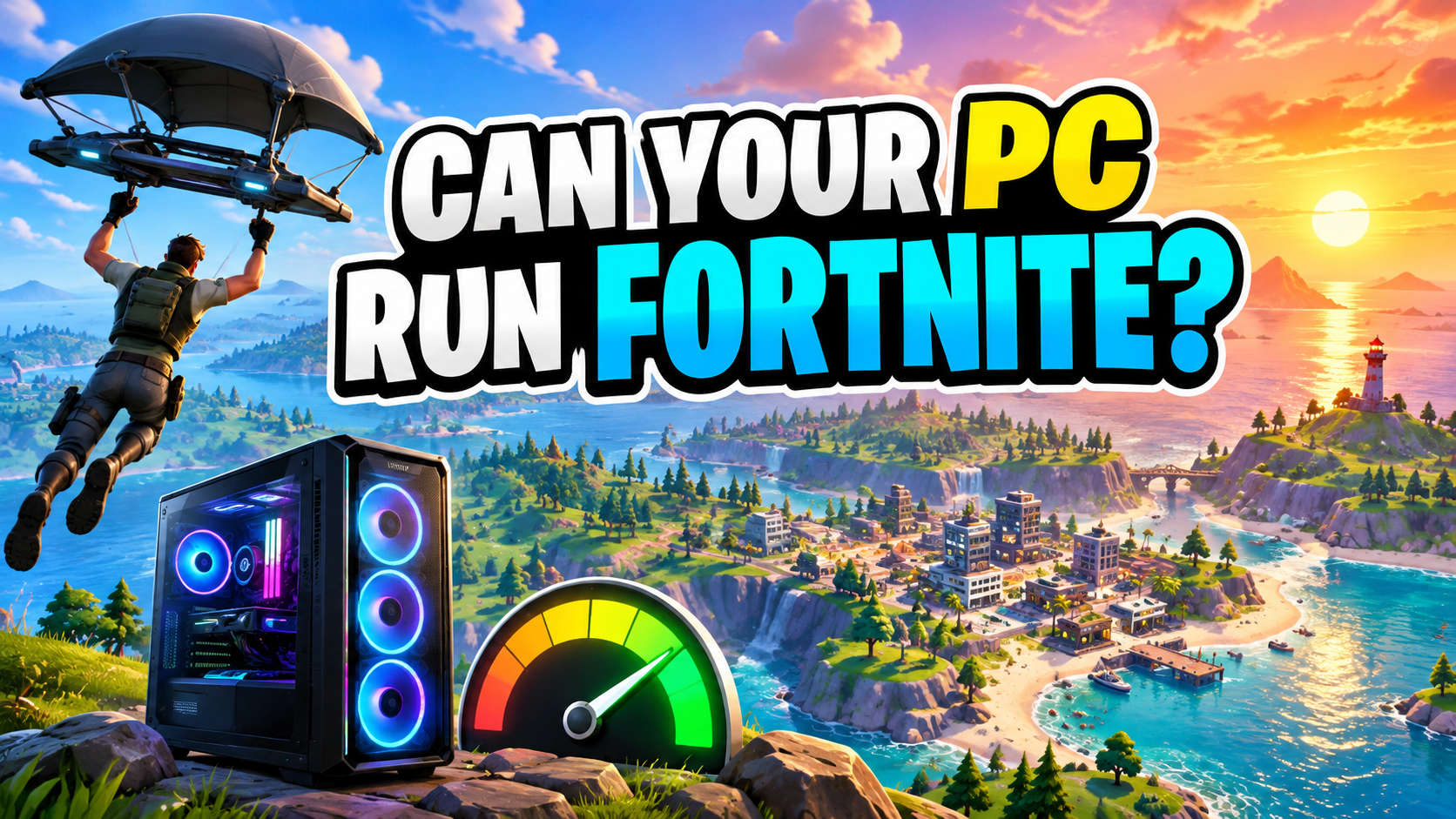
You are looking down at the island from the Battle Bus.
There are towns, forests, hills, buildings—and several other players who appear to have chosen exactly the same landing spot.
Right. Let’s land over there.
You glide down, land on a roof, and immediately start looking for a weapon.
You hear a chest.
You also hear footsteps.
Wait. Is somebody already here?
I have been on the ground for six seconds. I am not ready for this!
You grab a weapon, find some ammunition, and search for a shield.
Then—shots.
Hide! Build a wall!
You panic, press the wrong button, and build in a completely unhelpful direction.
I needed the wall over HERE!
Fortnite Battle Royale drops you onto an island where you collect weapons and items, move with the storm, and try to be the last player—or team—standing.
Every match asks you to aim, move, react, heal, and watch the players around you. Build mode adds construction to that list. Zero Build lets you concentrate on combat, cover, and movement.
When the picture stutters or your input arrives a moment late, that fast action becomes much harder.
Before jumping from the bus, let’s see whether your PC is ready to keep up.
The quick answer: Fortnite is easy to start, but smooth play needs more
Fortnite can start on fairly modest hardware, but the official minimum is a starting line. For smoother matches, aim closer to the recommended requirements.
A slower PC may still open the game with low settings. The difficult part is keeping the action clear and responsive when several players, effects, buildings, and rapid movements fill the screen.
Fortnite changes often, too. New seasons, maps, effects, and game modes can influence performance, so a little spare PC power is useful.
The main parts to check are the GPU, CPU, and memory. A stable internet connection also matters because Fortnite is an online game.
What kind of game is Fortnite?
Fortnite is much more than one mode, but many beginners arrive through Battle Royale or Zero Build.
▶ Jump from the Battle Bus
▶ Choose a landing place
▶ Find weapons, shields, and useful items
▶ Move before the storm closes in
▶ Fight, hide, escape, or build
▶ Try to be the last player or team standing
The plan sounds simple until you land beside somebody who already has a weapon.
Battle Royale includes building, which lets you create walls, ramps, floors, and cover during a fight.
Zero Build removes the building mechanic. You use natural cover, movement, positioning, and a rechargeable Overshield instead.
Both modes move quickly. A smooth frame rate makes it easier to follow enemies, aim, and react when the quiet little building suddenly contains three other players.
What kind of PC is good for Fortnite?
Think about the experience you want rather than asking only whether the game can open.
| How you want to play | What to expect |
|---|---|
| Try Fortnite on low settings | The minimum requirements may be enough to begin, but busy fights may feel less smooth. |
| Play comfortably at 1080p | Aim for the official recommended level or better, with 16 GB memory and a dedicated GPU. |
| Use higher graphics settings | A stronger GPU becomes increasingly important. |
| Play competitively at a high frame rate | Prioritise a strong CPU and GPU, plus a monitor that supports the frame rate you want. |
| Play online with fewer delays | PC performance and a stable, low-latency internet connection both matter. |
You do not need to learn a catalogue of graphics cards before your first match. PCGameChecker can scan the main parts and give you a simple five-star estimate.
View the detailed PC requirements ← click
These are Epic Games’ current minimum and recommended requirements for Fortnite on Windows.
| PC part | Minimum | Recommended |
|---|---|---|
| Operating system | Windows 10 64-bit, version 1703 | Windows 10 or 11, 64-bit |
| CPU | Intel Core i3-3225 at 3.3 GHz | Intel Core i5-7300U at 3.5 GHz, AMD Ryzen 3 3300U, or equivalent |
| Memory | 8 GB RAM | 16 GB RAM or higher |
| GPU | Intel HD 4000 on PC or AMD Radeon Vega 8 | Nvidia GTX 960, AMD R9 280, or equivalent DX11 GPU |
| Video memory | — | 2 GB VRAM |
| Storage | — | NVMe solid-state drive |
Beginner shortcut
The minimum column means “the game may start.” The recommended column is the more useful target when you want matches to feel comfortable. Competitive play or Epic quality settings can require considerably stronger hardware.
Requirements checked September 9, 2026. Source: Epic Games Support: Fortnite system requirements for PC
When does Fortnite make your PC work harder?
A calm moment spent opening a chest can become a very busy fight in seconds.
Several players appear.
Builds rise around you.
Explosions and visual effects fill the screen.
You turn quickly while trying to follow an opponent.
These are the moments when a struggling PC becomes easier to notice.
Busy fights
The GPU has more players, objects, effects, and movement to draw.
Fast reactions
The CPU helps keep game logic and rapidly changing action moving.
Updates and background programs
Limited memory can make the game less comfortable when other programs are open.
Which PC parts matter?
GPU
Draws the island, players, effects, shadows, and movement. It has a major influence on graphics settings and frame rate.
CPU
Helps process the fast-changing match behind the picture. A stronger CPU can matter when aiming for a high frame rate.
Memory
Gives Fortnite and Windows room to work. The official recommended amount is 16 GB.
Internet connection
Carries your actions to the game server and brings other players’ actions back. High latency can feel like delayed movement or building.
Stuttering and lag are two different problems
They can feel similar, but the cause may be different.
The picture becomes choppy during busy scenes
This often points toward graphics settings or PC performance.
Players jump around or actions feel delayed
This may involve the internet connection, Wi-Fi stability, or latency.
A powerful PC can still feel delayed when the connection is unstable. A fast connection cannot make an overloaded GPU draw the game faster. Checking which symptom you see helps you choose the right fix.
How to make Fortnite run more smoothly
Try the easy changes first:
- Lower the graphics quality
- Reduce shadows and effects
- Try Performance Mode if it suits your PC
- Close programs you are not using
- Update your graphics driver
- Use a stable wired connection or stronger Wi-Fi when possible
You can begin with lower settings and raise them one step at a time. The best setting is the one that keeps the match clear and responsive on your own PC.
Still unsure? Let PCGameChecker take a look
The important question is simple:
“Can my PC run Fortnite?”
PCGameChecker scans your CPU, GPU, and memory, then shows a beginner-friendly five-star estimate and the part most likely to affect the game.
Check your PC before the Battle Bus leaves
Fortnite is quick to install and easy to understand: land, collect gear, survive, and try to win.
The match itself can become wonderfully chaotic. A comfortable PC and stable connection help your aim, movement, and decisions keep up with that chaos.
Check your PC, choose your landing spot, and remember—the wall goes in front of you.